
The Timeless Art of Balinese Weaving
For generations, Balinese artisans have transformed a humble climbing fern into beautiful, durable fashion accessories. Today, people around the world admire Ata grass bags for their intricate weaving, natural character and connection to Bali’s artistic heritage.
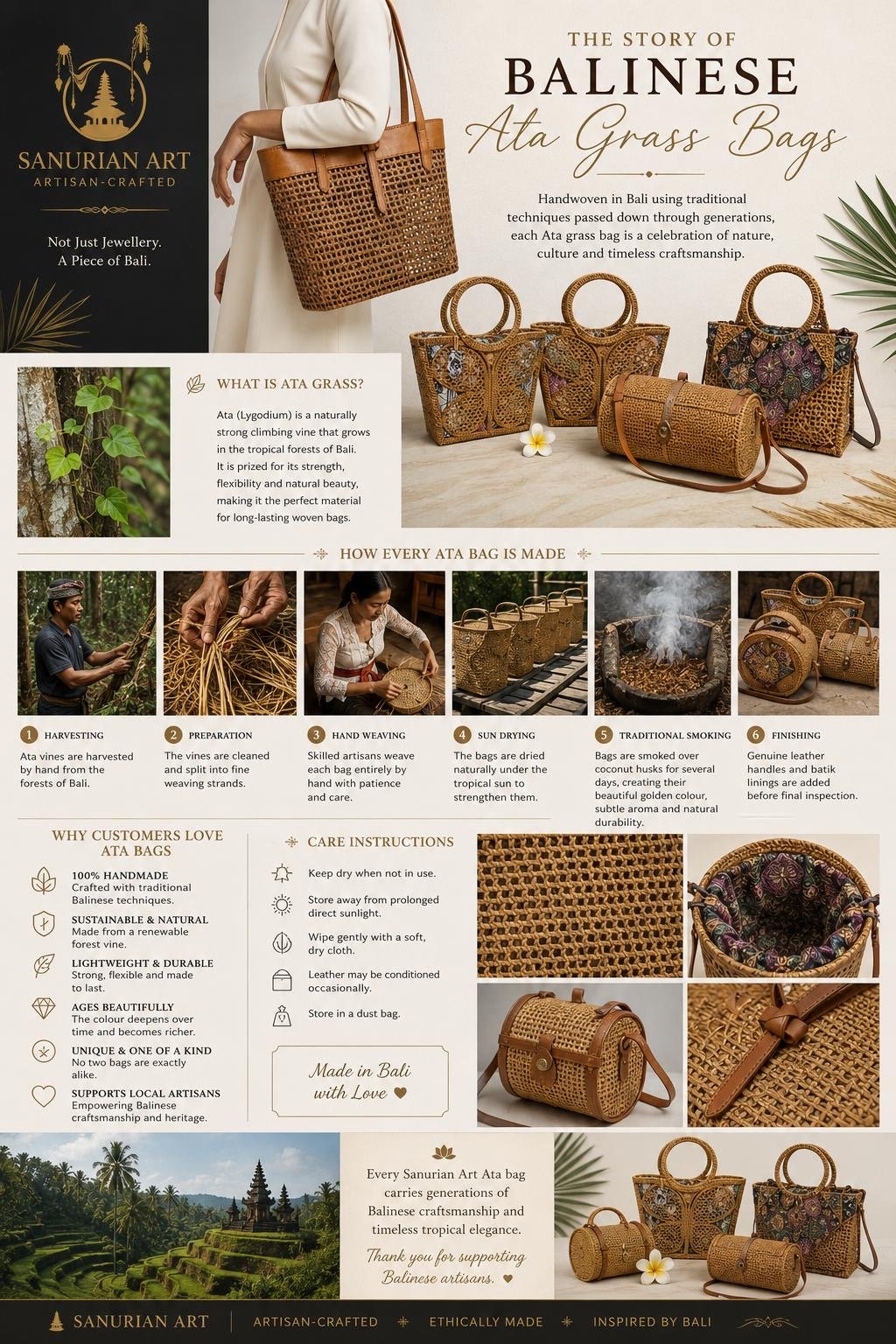
At Sanurian Art, we celebrate these remarkable creations and the artisans who make them. Each artisan weaves every bag by hand, using traditional skills that families and communities have preserved across generations
What Is Ata Grass?
As a result, every Ata grass bag carries its own character. Small variations in colour, shape and texture make each piece genuinely unique.
Ata grass (Lygodium circinnatum) is a tropical climbing fern that grows throughout parts of Southeast Asia, including Indonesia. Although people commonly call it “Ata grass,” the plant belongs to the fern family rather than the grass family.
Its long, flexible stems create an excellent natural material for weaving. In addition, artisans value Ata for its strength, durability and distinctive texture.
Once artisans prepare, weave and smoke the material, it develops the rich golden-brown colour associated with traditional Balinese Ata bags.
The Traditional Ata Bag-Making Process
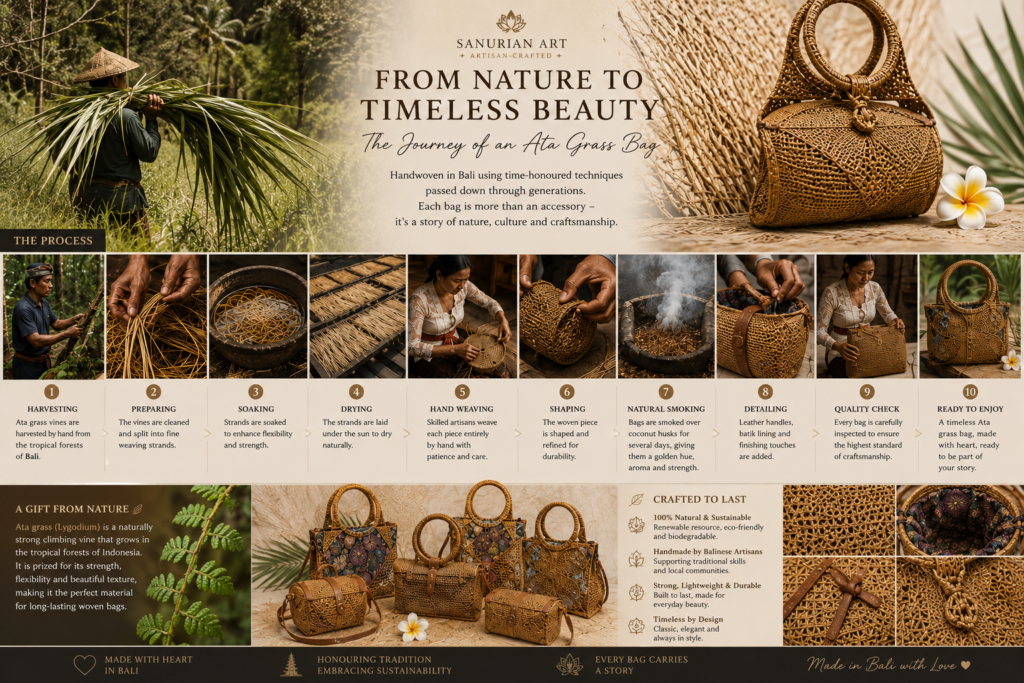
Creating an authentic Ata grass bag requires patience, precision and extensive handwork. Artisans complete each stage carefully, from selecting the raw vines to attaching the final leather and fabric details.
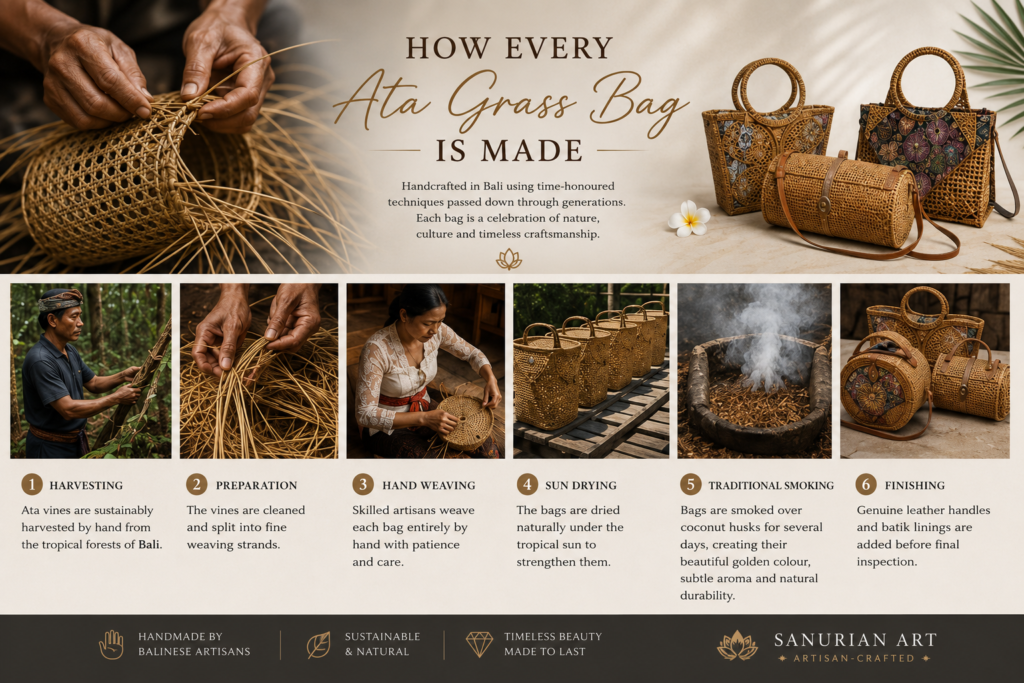
1. Harvesting the Ata Vines
First, harvesters select mature Ata vines with the right strength, length and thickness. Careful selection helps the finished bag retain its structure and durability.
Responsible harvesting also protects the future supply of this valuable natural material.
2. Cleaning and Preparing the Vines
Next, artisans clean the harvested vines and remove the unwanted outer layers. They then split the vines into fine, flexible strands suitable for detailed weaving.
3. Weaving Each Bag by Hand
This preparation demands accuracy because the quality and thickness of each strand affect the final texture of the bag.
After preparing the strands, skilled artisans begin the most detailed stage: handweaving.
Depending on the size, pattern and complexity, one bag may require several days of careful work. Moreover, the artisan creates every curve, edge and decorative pattern without mass-production machinery.
4. Drying Under the Balinese Sun
Once the artisan completes the weaving, they place the bag under the tropical sun. Natural drying strengthens the woven structure while helping the bag retain its intended shape.
The weaver shapes the base first and gradually builds the bag’s sides. Throughout this process, the artisan maintains even tension to create a strong, balanced structure.
The drying time depends on the weather, the thickness of the weave and the size of the bag.
5. Smoking Over Coconut Husks
Next comes one of the most distinctive stages of traditional Ata craftsmanship. Artisans smoke the woven bags over coconut husks for several days.
Therefore, the final colour may vary slightly from one bag to another. These natural variations contribute to the individual beauty of every piece.
During this process, the smoke gradually deepens the material’s colour and creates warm shades of honey, caramel and brown. It also gives authentic Ata bags their subtle, earthy aroma.
6. Adding the Finishing Details
Finally, artisans attach the handles, straps, closures and decorative details. Depending on the design, they may also add genuine leather trims, cotton interiors, zippers or colourful Balinese batik linings.
The maker then checks the weaving, structure and finishing details before the bag joins the Sanurian Art collection.
Why Are Ata Grass Bags So Special?
Ata grass bags combine natural beauty with remarkable craftsmanship. Their detailed weaving creates a lightweight yet structured accessory suitable for many occasions.
For example, an Ata bag can complement casual daytime clothing, resort wear, summer outfits or elegant evening styles. Its warm, natural tones also pair beautifully with linen, cotton, neutral colours and tropical prints.
Furthermore, Ata bags offer several distinctive qualities:
- Skilled Balinese artisans make them entirely by hand.
- Natural Ata vine gives them strength and flexibility.
- Traditional smoking creates their warm colour and earthy aroma.
- Handweaving makes every bag slightly different.
- Genuine leather and batik details add character and elegance.
- Careful maintenance can preserve their beauty for many years.
Instead of following short-lived fashion trends, Ata bags offer a timeless style that reflects nature, culture and craftsmanship.
Natural Variations Make Every Bag Unique
Natural Ata vine never produces a completely uniform result. Therefore, you may notice slight variations in colour, weave, texture or shape.
These differences do not represent faults. Instead, they reveal the natural material and the artisan’s individual handwork. Over time, the bag may also develop a deeper tone and additional character.
Consequently, no two authentic handcrafted Ata bags look exactly the same.
Supporting Balinese Artisan Communities
When customers choose authentic handmade Ata bags, they support the artisans who continue Bali’s traditional weaving practices.
This support helps craftspeople preserve valuable knowledge and share it with younger generations. In addition, artisan work provides income for local families and communities.
Every purchase recognises the patience, skill and creativity behind the finished product. Most importantly, it helps keep an important part of Balinese cultural heritage alive.
How to Care for an Ata Grass Bag
With appropriate care, your Ata grass bag can retain its beauty for many years.
- Keep the bag in a cool, dry and well-ventilated place.
- Avoid prolonged contact with rain or excessive moisture.
- Keep it away from strong sunlight when you are not using it.
- Remove dust with a soft, clean and dry cloth or brush.
- Allow a damp bag to dry naturally in a shaded area.
- Avoid chemical cleaners and direct heat.
- Condition genuine leather details with a suitable leather-care product.
- Store the bag inside its dust bag.
- Avoid placing heavy objects on top of it.
Additionally, allow the bag to breathe occasionally during long periods of storage.
Experience Authentic Balinese Craftsmanship
At Sanurian Art, we carefully select handcrafted Ata grass bags that express the beauty of Balinese tradition while complementing modern lifestyles.
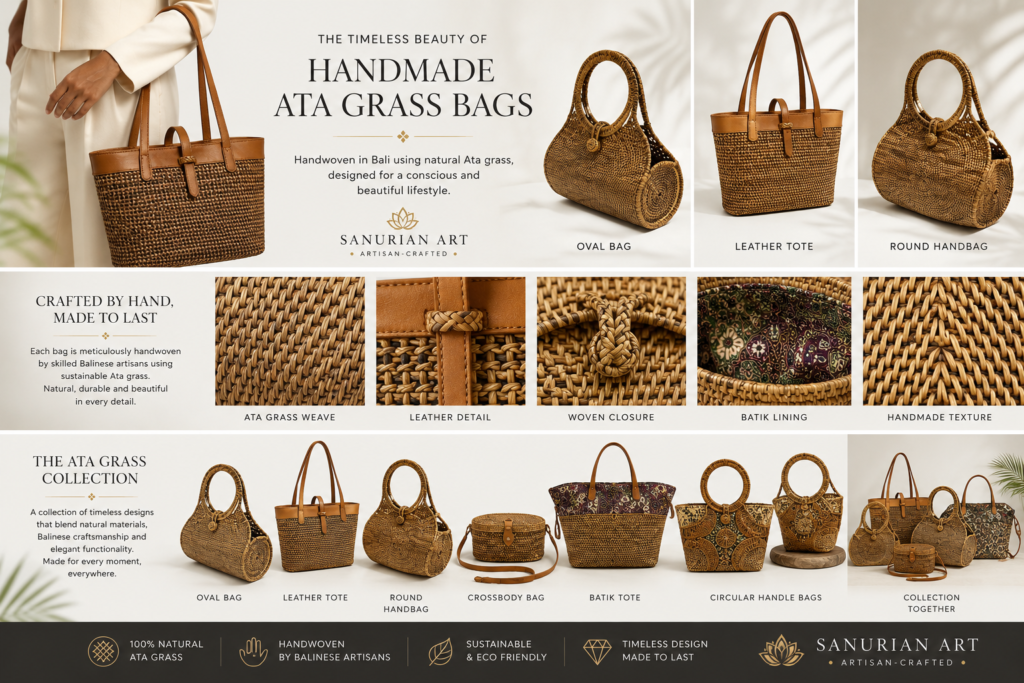
Each bag reflects the artisan’s patience, creativity and attention to detail. Therefore, it represents far more than a beautiful fashion accessory. It creates a lasting connection to the people, culture and natural beauty of Bali.
Explore the Sanurian Art Ata grass bag collection and discover timeless pieces shaped by nature and handcrafted with care.
Carry a piece of Bali wherever you go.